
1 Corinthians 1:10-18
January 24, 2026
Ambiguous – “susceptible of multiple interpretation; doubtful or uncertain.” Nonchalant – “appearing casually unconcerned; indifferent.” Paradox – “A seemingly contradictory statement that may nonetheless be true.” Remember when you were in middle school or high school and you had to take vocabulary tests? Every week you would get a new list of words and definitions, and you had to spell them correctly, write out the definitions, or use them in a sentence. What is interesting about the English language is that it is always changing, adapting, and adding new words or concepts. For example, coffee shops have their own language, as people use words like “frappuchino,” “grande,” and “macchiato” when ordering coffee. And then you can sit down at a table, connect to wi-fi, and read your texts, tweets, and emails on your phone, tablet, or laptop. Now if I had used those coffee shop words when I was in high school, my parents would have looked at me with a confused look on their faces as though I was speaking some kind of gibberish.
Yet, for all of the words we add to our vocabulary each year, it always seems like we lose a few each year. Today, there are thousands of “apps” that we can download on to our smartphones and tablets. But I think if you were to ask anyone under the age of 21 what an “app” stands for, you might get some blank looks, as if to suggest, “An app is an app, right?”
But an “app” is really shorthand for “application” – which is “the act of applying or putting something on.” Therefore, an “app,” according to the dictionary definition is not a thing, it is an activity. And I think it is very important for us to remember this definition, because as followers of Jesus Christ we are called to give an application of Christ, that is, we are to apply our faith in Jesus to our life and lifestyles. An “app” then is not just a name for some handy, helpful bit of electronic information. An “app” is the way we faithfully apply our personal belief in Jesus into behaviors in this world. Or you could say that an “app” moves the words we speak in our creeds every Sunday into “deeds” during the week.
The “apps” we download today on our phones are each highly specific, giving people exactly what they want at the moment they want it. These electronic “apps” are designed to make our lives easier and information more accessible in a matter of seconds. But the app we use when we apply God’s love to others through our daily living, may not make our lives any easier. In fact, it may be just the opposite, applying and living the love of Jesus in service to others might slow us down or even make life more difficult, because it is a “relationship app.”
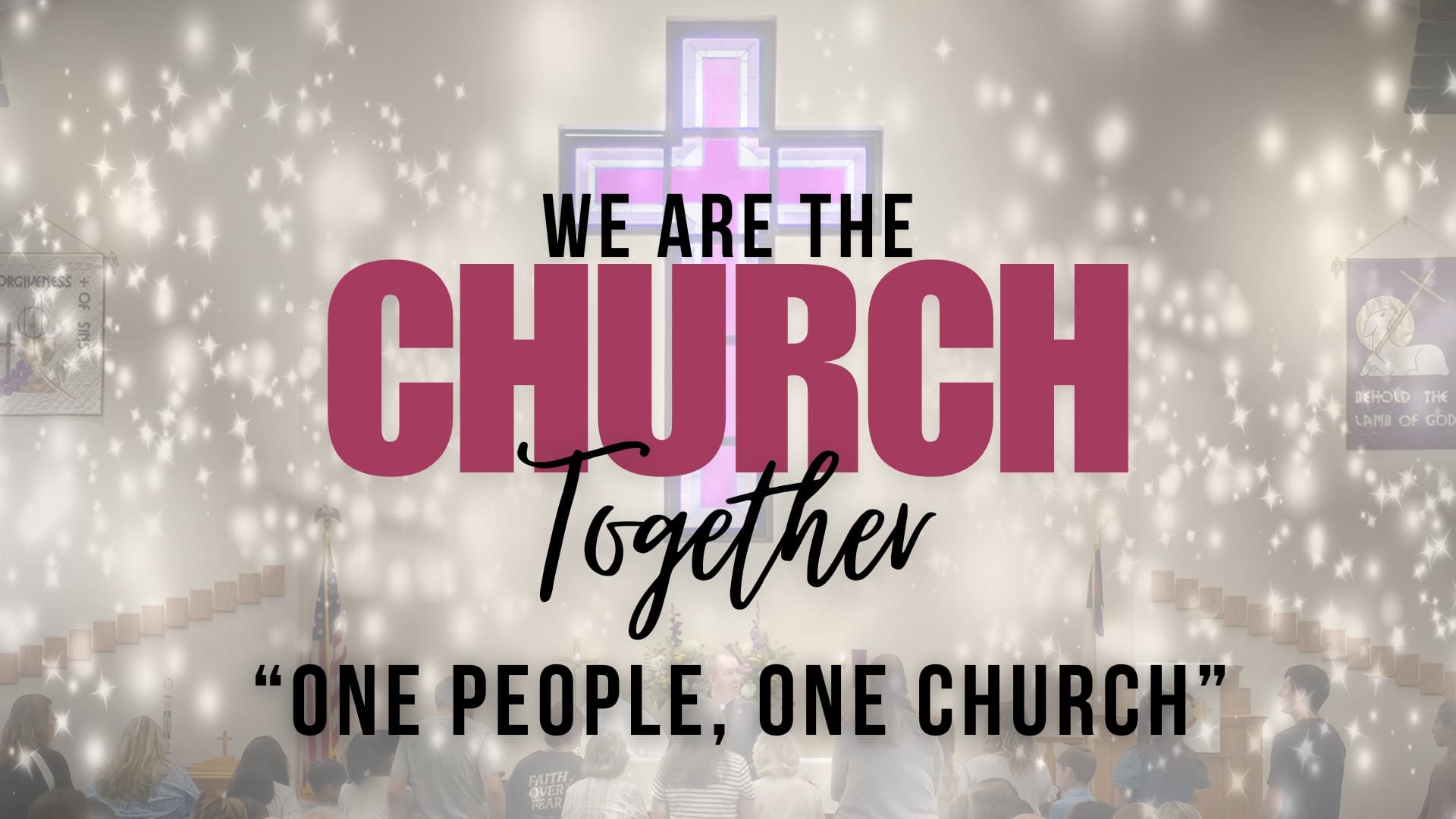
In our second lesson for today, Paul’s words to the Christians living in Corinth remind us how easy it is for those who believe they are following Jesus to let other “applications” get in their way. In particular, the Corinthian Christians were apparently more concerned about style in sharing the Gospel rather than the substance of the Gospel. The problem was instead of seeing the different ways people present and hear the message of Christ as a blessing and helpful to people to connect them to God, they were using the different styles to cause division. Now when it comes to our congregation we have differences. But I think one of the great things about our congregation is that God has blessed us with a diverse group of people over the past 25 years. We have old people, middle aged people, and young people. We have those who love traditional music and those who love contemporary music. We have people from different backgrounds and experiences, with different gifts and talents. So, do you see our differences as a blessing or a point of contention?
Consider for a few moments the kind of people Jesus approached and spent time with on a regular basis. Jesus regularly spent time with His disciples, Pharisees, tax collectors, people who had diseases, committed adultery, those who were not popular, Jews and Gentiles, women, men, and children. And His reason for spending time with every person He met, was so they could hear the Good News of His love for them and the forgiveness He offered for their sins. Jesus wanted a relationship with them, so they could live with Him forever in His heavenly kingdom.
Therefore, we need to be prepared to spend time with people who are different from you and me, because that is part of our call in being a disciple of Jesus. Paul reminds us 1 Corinthians 12 that Jesus is the head of the body, the Church, and there are different parts that make up the body. Not every part is the same, but they are all important. Not every member of this church is the same, but every person here, every person who is watching online, every person who is a part of this church in some way is important.
God’s encouragement to us in this text is not that we demand that our differences be accepted, but rather that we accept others even if they are different and that we don’t let our differences divide us. So the solution to being a church where different people can live and work alongside each other is to focus on substance of the Gospel rather than style in which we share it, namely to focus on Jesus and Him alone. Paul emphasizes this by reminding the Christians in Corinth that they were not baptized in the name of just anyone, but Jesus Christ. Paul, Apollos, and Cephas (which was another name for Peter) were among the most respected and the most rejected followers of Jesus in the first century, but Paul refuses to allow their names to be identified as the “app” or the model for a faithful life of following Jesus.
There is only one name, one baptism, and one story that makes the transformation of human life possible. And that name is Jesus, the name above all names, the One who is anti-style. After all, He was born to a poor family, He grew up in an obscure village, He called simple, ordinary fishermen (as we heard in our Gospel lesson) to do the work of building God’s kingdom here on earth, and He was rejected by most of the people of His day. There certainly wasn’t any style that attracted people to Jesus. And God did not show any favoritism toward His Son, as well. Instead of treating His Son better than everyone else, what did God do? He punished His Son for the sins of the world. He sacrificed His Son with the mindset of, “I’m going to love the world, even if the world won’t love me back. I’m going to save the world, even if the world rejects me. I’m going to take away the sins of the world, even if no one pays attention.”
Isn’t that amazing? That God looks at you and me, and He sees all of our shortcomings. He sees how shallow we are, how judgmental we are, and how we tend to favor style over substance. But instead of punishing us, He punishes His Son. Instead of being angry with us, He applies His love and forgiveness to us. From God’s point of view, you and I really have no style, and yet, because of Jesus, God forgives us, loves us, and saves us. And that is the message Paul wanted the Christians in Corinth to focus on and apply to others. Stop focusing on the style of the speaker and focus simply on Christ and the substance of His message.
For us, this means the application of Christ’s love must be the “app” we download daily into all we do. So as you leave hear today or when some of you turn your computers and televisions off today, consider what application of your faith can you download? Maybe you can download the “just checking in” app, in which you take some time this week to contact someone you haven’t seen in worship for a while. Or how about the “I care about you” app, in which you do something for another individual without expecting any thanks in return or you tell them about Holy Cross and invite them to join us next week? Maybe the “turn the other cheek” app would be a good one for you, even though it may be one of the hardest apps to run. How about the “love, faith, hope, and forgiveness” app? Fortunately these words are part of God’s Word and as long as we continue to show them and apply them to others, these words and what they mean will never disappear from our vocabulary. May God bless you as we all seek to serve Him every day by applying His Word to our lives and caring for others as though we are caring for Jesus Himself.